Biomedical Sciences at FMUI: Advancing Research and Education
MPBS FMUI defines “Biomedical Sciences” as disciplines of medicine utilizing basic concepts and principles of life sciences (biology, chemistry, and physics) to:
Explain phenomenon of life at the molecular, cellular, organ and whole organism levels
Explain the relationship of those phenomenon with pathogenesis of diseases
Discover or develop novel strategies/substances for prevention, treatment, and recovery of impairment due to disease
Biomedical research promotes new ways of diagnostics, care, rehabilitation and regeneration in medicine. Excellent research and biomedical science education provided by the Master’s Programme in Biomedical Sciences, Faculty of Medicine, Universitas Indonesia is the spearhead of the latest medical science and research.
Among the results of countless studies, we proudly highlight the development of vaccines and herbal medicines, stem cells including cancer stem cells, hypoxia and oxidative stress as our study with well-known publications or patents.
As a pioneer of the Biomedical Science graduate school in Indonesia, our graduates gain unlimited experience in participating in ongoing research funded by international and local grants, and are also involved in academic cooperation with leading international institutions such as the University of Tsukuba (Japan), Tsinghua University (China), Otago University (New Zealand), and Yonsei University (South Korea). Both academics, research institutions and the national and international biopharmaceutical industry say our graduates are the best graduates with strategic and respected leadership positions.
Concentration - 01
Anatomy
Anatomy concentration focuses on the study of human anatomy. Human Anatomy is the science that studies the structure of human body and its development, including gross anatomy and its clinical significance, body movement, physical anthropology, morphogenesis and regeneration.
Biochemistry is the study of the chemical substances and vital processes occurring in live organisms. Main subjects of Biochemistry concentration are Macromolecules, Regulation of Gene Expressions, Biomembrane, Signal Transduction & Cellular Communication, and metabolism.
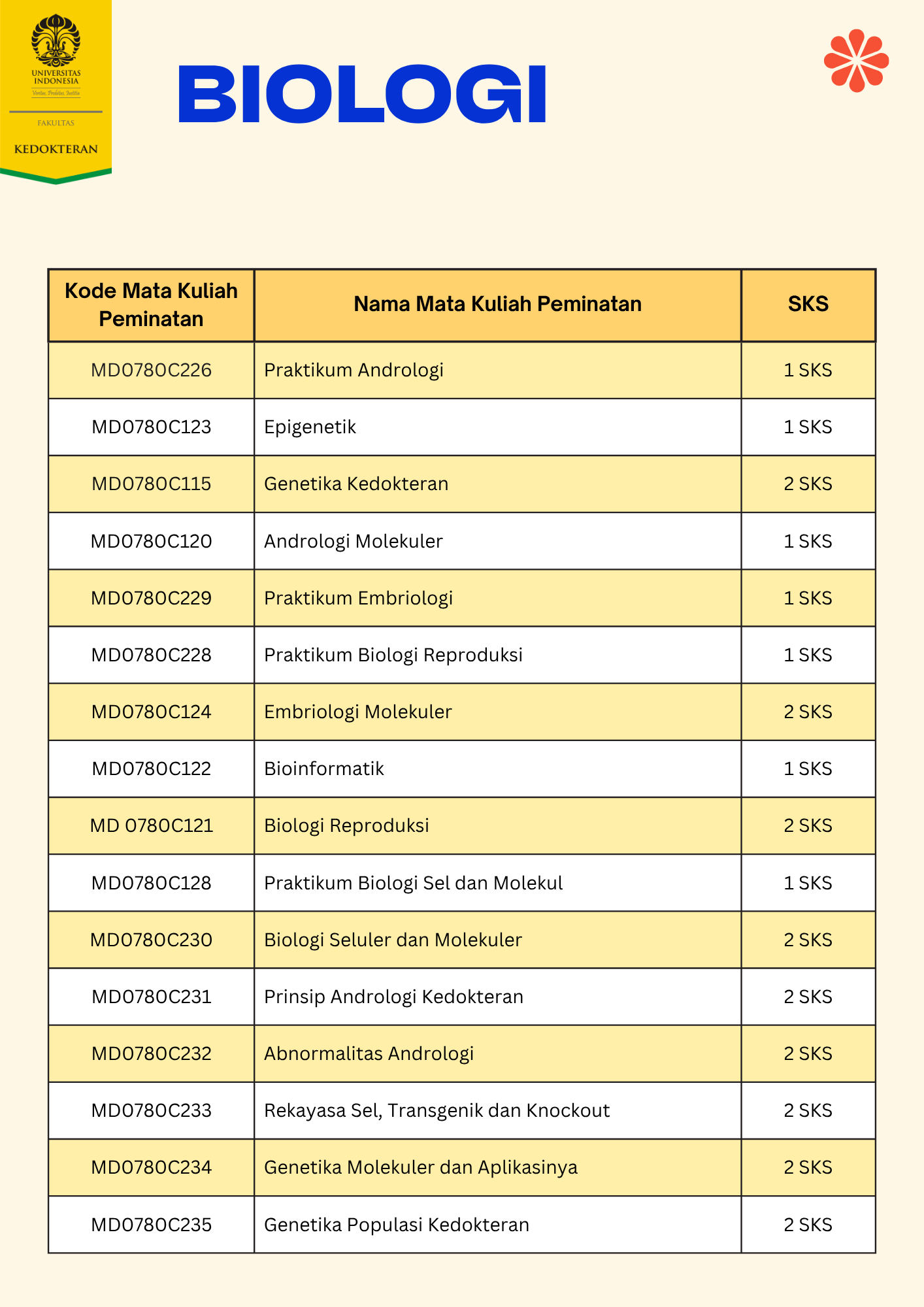
Biology is a life science with broad objectives that includes all living things. The course provides an interdisciplinary approach to studying Medical Biology, with five central themes : Genetic, Molecular and Cellular Biology, Reproductive Biology, and Embryology.
Pharmacology Concentration studies how chemical compounds and drugs interact with and affect living organisms. This specialization focuses on the mechanisms of drug action, their effectiveness, and the assessment of potential risks and benefits to support the development of safe and effective therapies.
Physiology is the study of biological function — examining how organs, tissues, and cells work together to sustain life and maintain homeostasis. It bridges structure and function by investigating the mechanisms that govern health, adaptation, and disease, from molecular pathways to systemic regulation, and how living systems respond to internal and external stimuli.
Histology, also known as microscopic anatomy or microanatomy, is the branch of biology that studies the microscopic anatomy of biological tissues. Histology is the microscopic counterpart to gross anatomy, which looks at larger structures visible without a microscope.
the field of study concerned with microorganisms (bacteria, viruses, fungi, parasites), infectious diseases, and the development of medical innovations (such as vaccines or molecular diagnostics)
Microbiology is the scientific study of microorganisms, those being unicellular, multicellular, or acellular. Microbiology encompasses numerous sub-disciplines including virology, bacteriology, protistology, mycology, immunology, and parasitology.
Concentration - 08
Parasitology
Parasitology is the study of parasites, their hosts, and the relationship between them. As a biological discipline, the scope of parasitology is not determined by the organism or environment in question but by their way of life.
Studying the occurrence of aberrant biological changes, beginning at the molecular and subcellular/organelle levels, and extending through the cellular, tissue, and organ levels, up to the system or individual level.
The Immunology concentration focuses on the study of the immune systems of living organisms, cellular responses, molecular immunology, vaccine development, and innovations in precision immunotherapy.
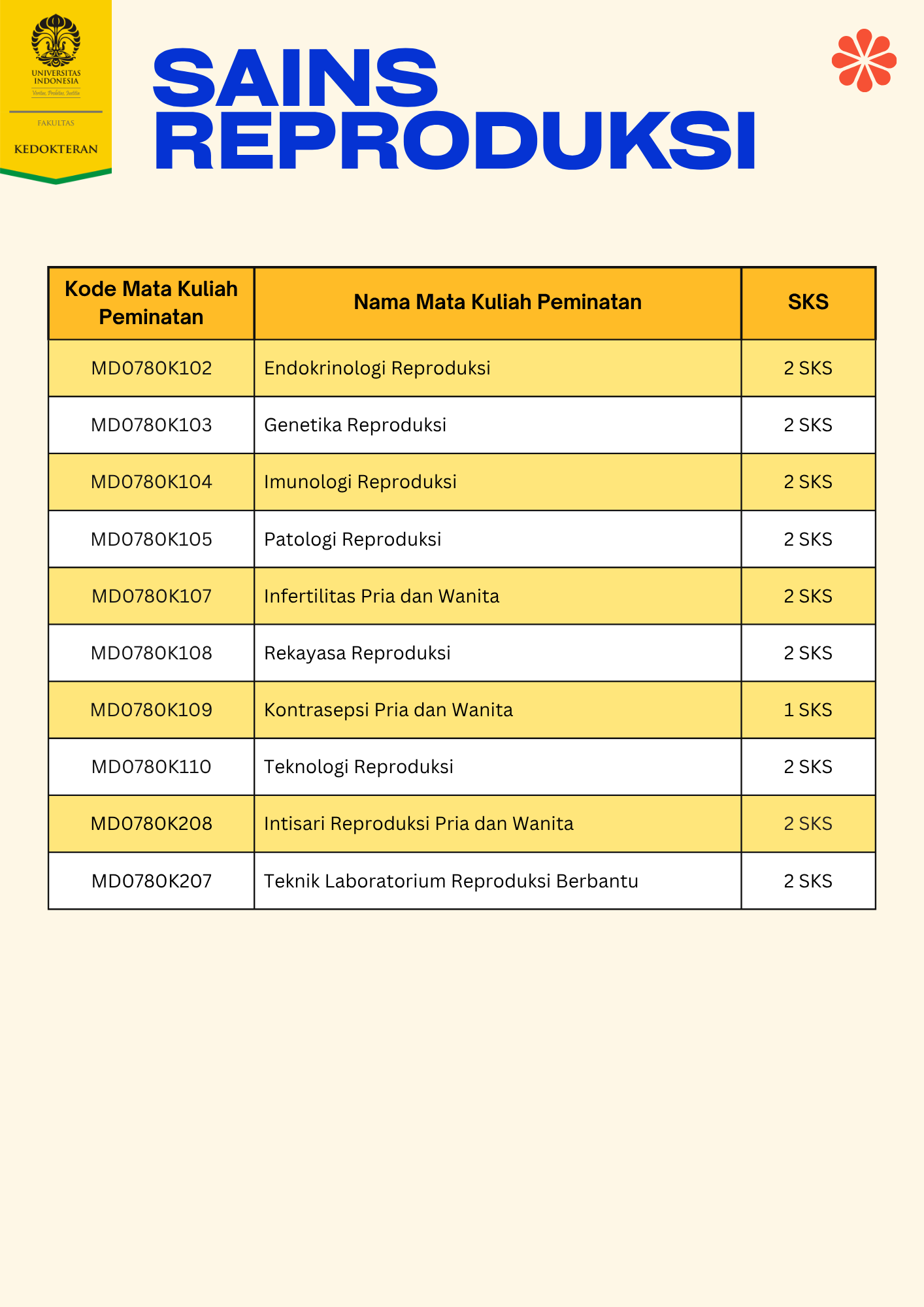
Medical reproductive science mainly studies reproductive processes (especially in human), assisted reproductive technology, male and female infertility, reproductive immunology (reproductive genetics), and reproductive engineering (contraception).
Transfusion science is a field that integrates biomedical sciences into the provision of blood for transfusion, as well as addressing the risks and impacts associated with such blood transfusions.
The oncology concentration focuses on an in-depth study of cancer from the perspectives of laboratory research, molecular pathology, and disease mechanisms.
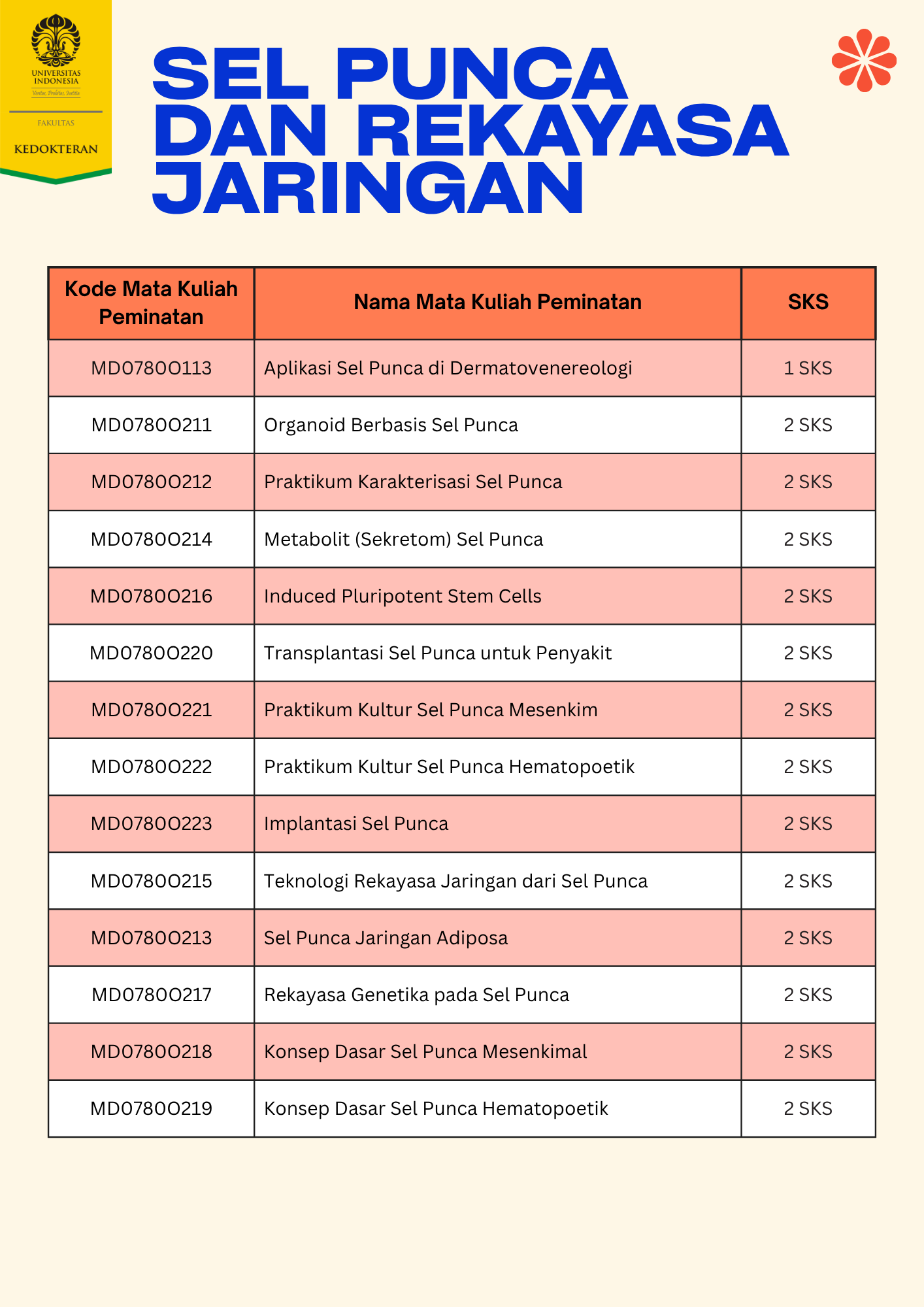
This concentration focuses on the field of regenerative medicine—the development of therapies to repair, replace, or regenerate cells, tissues, or organs damaged by disease, injury, or aging.
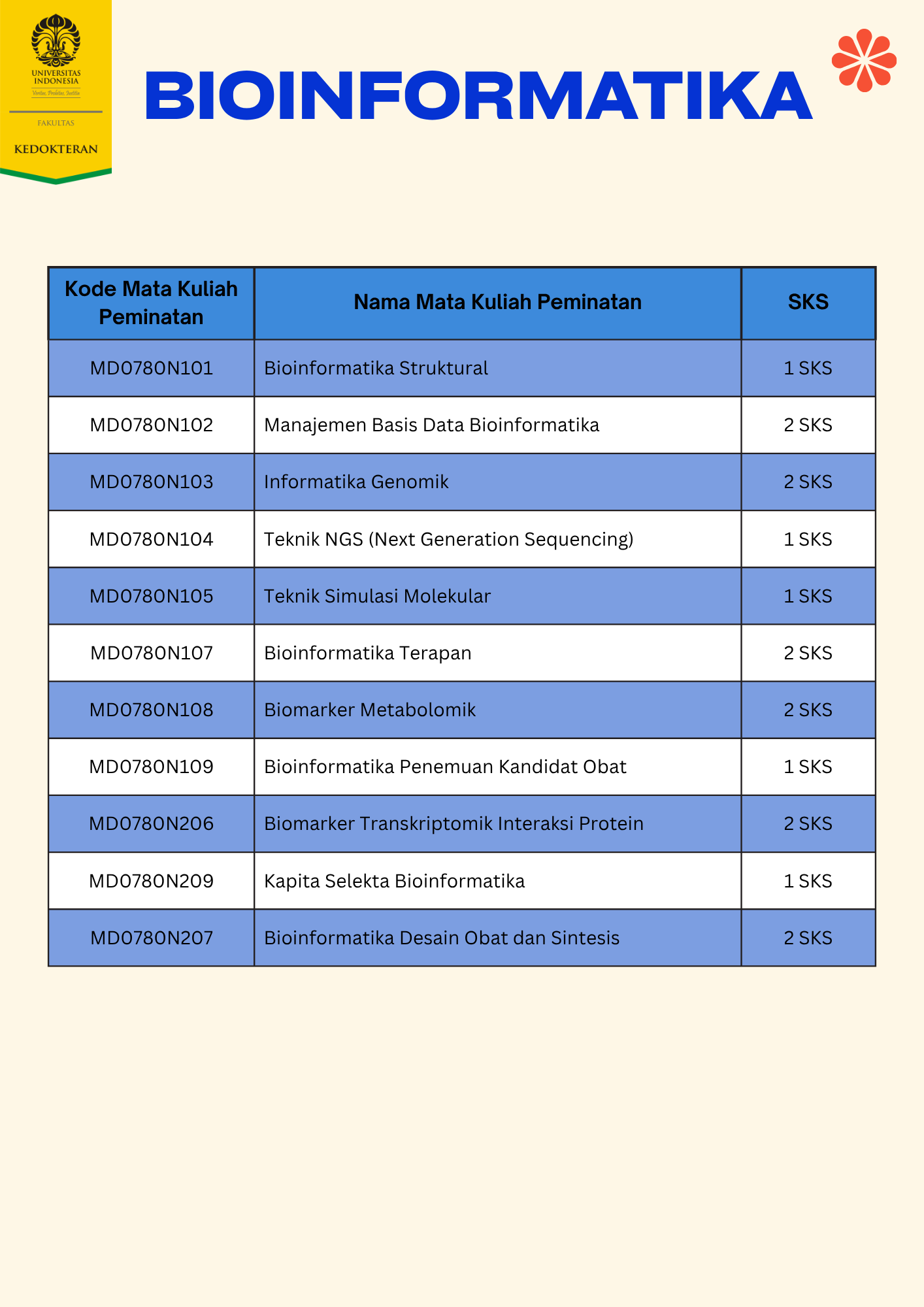
In this concentration, students study the integration of molecular biology/medicine with information technology, statistics, and computation to manage and analyze large-scale biological data.
This concentration focuses on the optimal use of Indonesian medicinal plant resources to develop rational herbal medicines, tested for effectiveness, quality, and safety.